Sustainable pest management is one of the core pillars of modern agribusiness strategy, especially in the oil palm sector, which is characterized by monoculture planting and cyclic pest infestations. PT Sumber Tani Agung Resources Tbk (STAA), as a company committed to environmental stewardship, consistently adopts an ecological approach through the implementation of Integrated Pest Management (IPM) across all of its operational units. One of the key components of STAA’s IPM strategy is the use of natural pest control plants, known as refugia plants, which serve to support the existence of natural enemies of pests. This approach has proven to deliver ecological, technical, and economic benefits, while also strengthening the resilience of the agricultural system as a whole.
The Role of Beneficial Plants in Supporting Natural Enemies
In the oil palm agroecosystem, the presence of natural predators and parasitoids acts as the primary biological defense in keeping pest populations within economically manageable thresholds. To ensure the effectiveness of these natural enemies, STAA utilizes refugia plants that provide essential resources such as nectar and pollen, shelter, and breeding grounds for beneficial insects.
These refugia plants help create microhabitats that support the life cycles of various predator species, such as Sycanus sp., Orius sp., and Eocanthecona sp.—all of which are natural enemies of oil palm leaf-eating caterpillars (commonly referred to in Indonesia as UPDKS). These pests can significantly impair the photosynthetic capacity of the plant and reduce yields if left unmanaged.
Refugia Plant Species Utilized
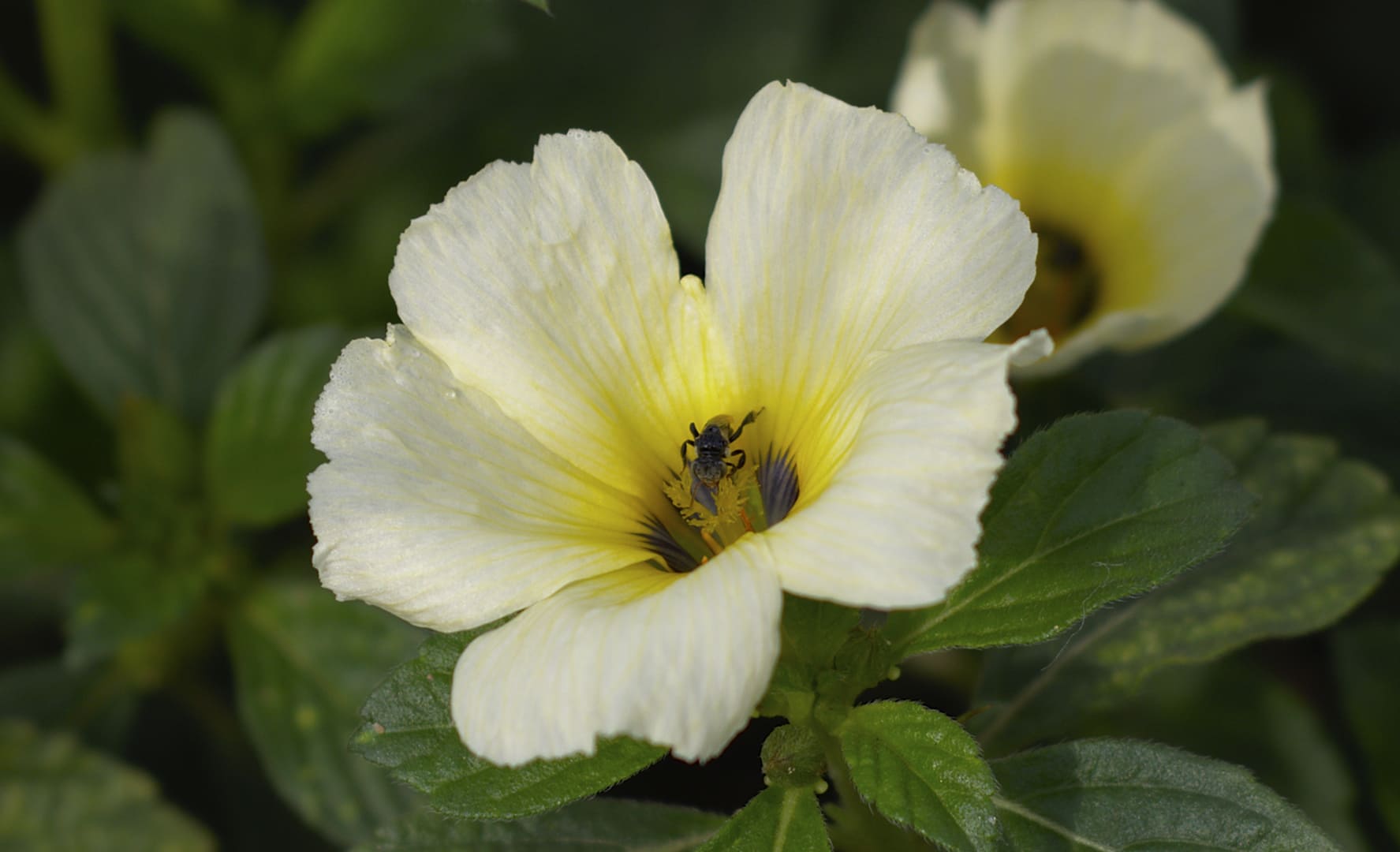
Turnera subulate
Commonly known as the “Eight O’Clock Flower,” Turnera subulata is a flowering species of the Passifloraceae family, native to Mexico and the West Indies. This plant is known for its nectar production and strong visual attraction to beneficial insects. Its primary value lies in serving as a natural habitat for Sycanus, an effective predator of Setothosea asigna, a fire caterpillar species. Sycanus not only resides within but also sources food from this plant, making Turnera an ecological stronghold for its survival.
Antigonon leptopus
Also known as Coral Vine or Mexican Creeper, Antigonon leptopus is a prolific flowering vine that produces nectar consistently. It effectively supports parasitoids such as Trichogramma sp. and Telenomus sp., which target pest eggs and larvae. Planted in buffer zones and non-productive areas, Antigonon enhances biodiversity and helps control pest populations without chemical pesticides. Field observations have shown that parasitoid populations rise significantly during the flowering season, leading to a measurable reduction in pest life cycles.
Cassia cobanensis
Cassia cobanensis is a yellow-flowering shrub from the Fabaceae family that provides both habitat and nourishment for predators like Eocanthecona sp., Coccinellidae, and Neuroptera. With its dense canopy and complex leaf structures, it offers refuge from environmental extremes. In addition to its refugia function, Cassia enhances soil fertility through nitrogen fixation and contributes to landscape-level plant diversity. This supports agroecological principles for building plantation environments that are more resistant to pest outbreaks and microclimate variations.
Agronomic and Ecological Benefits
STAA’s approach to cultivating pest-controlling plants goes beyond direct pest suppression. It delivers long-term positive impacts on the overall quality and efficiency of agricultural systems:
• Reduced dependence on chemical pesticides, preserving both macro and micro biodiversity and improving food safety.
• Operational cost savings due to lowered inputs for synthetic chemical use.
• Healthier working environments, minimizing pesticide exposure for workers and surrounding communities.
• Greater ecological stability, driven by improved biodiversity and resilience against biological pressures.
STAA’s Commitment to Environmentally Friendly Agriculture
The use of refugia plants at STAA is not merely a technical initiative—it is a strategic commitment to developing an adaptive, science-based, and sustainable agribusiness model. Expanding refugia coverage across operational areas reflects STAA’s effort to embed ecological sustainability into its core business strategy.
As a player that aligns with sustainability standards such as PROPER, ISPO, and RSPO, STAA positions biologically based pest management as a long-term investment in productivity, corporate reputation, and environmental stewardship.
Toward an Integrated Ecology-Based Farming System
STAA’s initiative to integrate pest-controlling plants into its plantation management system marks a pivotal shift from conventional to regenerative agriculture. By blending scientific research, agricultural technology, and ecological conservation, the company establishes a business model that is not only economically competitive but also aligned with global sustainability aspirations.
This strategy proves that sustainable farming is not a compromise to productivity—but a catalyst for achieving it. In the context of the modern palm oil industry, such innovations solidify Indonesia’s role as a responsible leader in the global vegetable oil market.